The Stained-Glass Windows of Peace With Christ

Purpose and Design
The stained-glass windows of Peace With Christ were designed to convey a message. The Stained-Glass Committee collaborated with design and glass artist Marge Davis to present Scriptural images to fill the windows above the Nave. Each window portrays an aspect of God’s grace revealed in Holy Scripture and fulfilled for us in Christ Jesus. The windows are not only decorative, but they are also intended to aid in worship. It is our prayer that they will provide a constant reminder of God’s faithfulness to us and to the whole church on earth.
The windows follow a simple pattern. As you face the altar, those on the left side are from the Old Testament and point to Christ as the center of those Books while those on the right side are from the New Testament and depict the words and works of Jesus. The windows above the rear of the Nave wall contain four designs that draw on descriptions of Jesus from Holy Scripture. The central window is a design of the Luther Rose.The windows above the chancel and altar represent God’s gifts of grace given in the Word, Holy Baptism, and the Lord’s Supper. The windows on each corner of the chancel wall represent our response to the gift of forgiveness and faith.
What follows is a brief description of each window with the prayer that your faith would be strengthened as you meditate on the great faithfulness of our Triune God.
To God be the glory!
Quick Links: Left Windows | Right Windows | Front Windows | Rear Windows | Transition Windows

The Tree of life Window
The Tree of Life appears in both the opening and closing chapters of the Bible (Genesis 2-3 and Revelation 22). In the book of Genesis, God places the Tree of Life and the tree of knowledge of good and evil in the middle of the Garden. The Tree of Life stands as a symbol of God’s life-giving presence and the fullness of eternal life given by God. In Revelation, it represents the restoration of the life-giving presence of God. Access to the tree had been cut off in Genesis 3:24, when God stationed mighty cherubim and a flaming sword to block the way to the Tree of Life. But in Revelation, the way to the tree is open again for all who have been washed in the blood of Jesus Christ by Holy Baptism.

The Ten Commandments Window
The Ten Commandments are depicted by Roman numerals on each tablet. Commandments one through three, regarding our relationship with God, are on the left tablet. Commandments four through ten, regarding our relationship to our neighbor, appear on the right tablet. The Ten Commandments are God’s unchangeable will for all humanity. They both convict us of our failure to fear, love and trust in God above all things while serving as a guide for our life of faith. We take great comfort in the words of St. John (John 1:17): “For the law was given through Moses, but grace and truth came through Jesus Christ.”

The Scroll Window
The Scroll window represents the writings of the Old Testament prophets. The center of all prophetic proclamation is depicted by the fish symbol, a representation of Jesus from the ancient New Testament church. The Greek word IXTHUS (fish) was an acronym used to identify Jesus and was composed by isolating the first letter of each Greek word to spell His title, “Jesus Christ, God’s Son, Savior”. Hebrews 1:1-2, “God, who at various times and in various ways spoke in time past to the fathers by the prophets, has in these last days spoken to us by His Son.”

The Crown Window
The Crown window suggests several different interpretations. It represents the reign of God’s Son as King of all Creation. It also represents the faithful service of Old Testament kings like David, who prefigured the coming King of Kings, Jesus. It may also represent the gift of eternal life and resurrection glory promised to all the faithful. Revelation 2:10, “Do not fear any of those things which you are about to suffer. Indeed, the devil is about to throw some of you into prison, that you may be tested, and you will have tribulation ten days. Be faithful until death, and I will give you the crown of life.”

The Wheat Window
Life is sustained by the gifts that God gives through creation. All good gifts and daily bread come from Him. The Psalmist reminds us, “Praise the Lord, O Jerusalem! Praise your God, O Zion! For He has strengthened the bars of your gates; He has blessed your children within you. He makes peace in your borders and fills you with the finest wheat.” (Psalm 147:12-14). The greatest gift of finest wheat bears for us the very body of Jesus in the Lord’s Supper which we celebrate at our altar.

The Holy Spirit Window
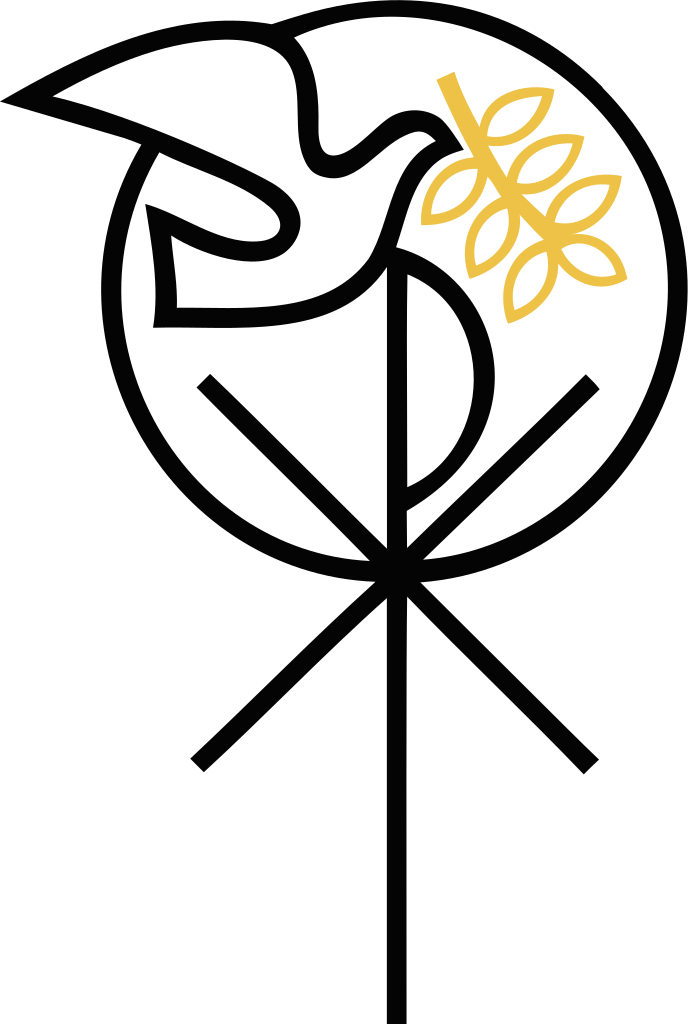
Some may view the Holy Spirit window as out of place in a series of windows portraying Old Testament symbols. However, we confess that the blessed Holy Trinity is eternal. The Holy Spirit is not a New Testament revelation. Genesis, chapter one, reminds us of the eternal presence and work of the Holy Spirit, “In the beginning God created the heavens and the earth. The earth was without form, and void; and darkness was on the face of the deep. And the Spirit of God was hovering over the face of the waters.” (Genesis 1:1-2). The Bible also reminds us that “no one speaking by the Spirit of God calls Jesus accursed, and no one can say that Jesus is Lord except by the Holy Spirit” (1 Corinthians 12:3).

The Nativity Window
The star of Bethlehem and its beautiful rays is represented clearly in this window. The incarnation of the Son of God is represented by a manger and begins the series of windows depicting aspects of Jesus’ life and teachings.
The three-fold light above the manger captures in art, what we sing in the hymn, “Silent Night”:
“Glories stream from heaven afar,
Heavenly hosts sing Alleluia!
Christ, the Savior, is born!
Christ, the Savior is born!”

The Branch, Vine and Fruit Window
Jesus said, “I am the vine; you are the branches. Whoever abides in me and I in him, he it is that bears much fruit, for apart from me you can do nothing.” (John 15:5). This window is a reminder that, as we gather around the Word of God and the Sacrament of the Altar in this place, Jesus abides with us and we with Him. From within the wall of our church, we go out bearing “much fruit,” namely the good news of forgiveness and life in Jesus.

The Loaves of Bread and Fish Window
This window represents a miracle of Jesus that is recorded in all four Gospel records. Jesus multiplied five loaves of bread and two fish to feed more than five thousand people, reminding us that He is true God and the One through whom all things were created and are sustained. The image in this window also moves us to give thanks to our Triune God for providing us all we need to support this body and life.

The Crown of Thorns and Nails Window
The suffering and death of Jesus is represented in this window with a crown of woven thorn branches and three nails. Jesus was horribly beaten and then mocked by Roman soldiers on the day of His crucifixion. The abuse included a crown of thorns, pushed down upon His head in a sarcastic insult of His title “King of the Jews.” The nails remind us of Isaiah’s prophecy that the Savior would be “pierced through for our transgressions” (Isaiah 53:5). Jesus’ hands and feet were pierced through with nails. There, suspended on the cross, He bore the sins of the world.

The Cross and Lily Window
From the cross death of Jesus, flows life. This wonderful reality is represented in the window by a white blooming lily flower. The lily has been a symbol of the resurrection in the church for many centuries. The shape of the Easter lily flower acts as a trumpet, sounding the message that Jesus has risen. Others have noted that lilies start as ugly bulbs, living underground for three years and then bloom into fragrant flowers. Thus, the Lily is a picture of the resurrection.

The Lamb of God Window
Following the baptism of Jesus, John the Baptist proclaimed Him to be “the Lamb of God, who takes away the sin of the world!” (John 1:29). Three years later, Jesus would fulfill those words by His death on the cross. His death was the perfect sacrifice that paid the price for the sin of the whole world. Jesus is also the living lamb spoke of in chapter 5 of the Revelation to St. John. “Worthy is the Lamb who was slain, to receive power and wealth and wisdom and might and honor and glory and blessing!” (Revelation 5:12). Here, His victory over death is represented by the lamb, Jesus, holding the cross. Like a flag on an ancient battlefield, our eyes are drawn to His victory over death and the grave for us!
Windows above the Chancel and Altar from Left to Right

The Trumpets Window
The gift of worship and praise. God gives us faith to believe in and trust Jesus Christ as our only Savior from sin and death. Our response to His saving work is thanksgiving. The Psalmist writes, “Praise him with trumpet sound; praise him with lute and harp!” (Psalm 150:3).

The Bible Window
The gift of God’s Word. The crimson page marker reminds us that the central message of the Bible is Christ’s blood shed on the cross to bring forgiveness and life to the world. We receive this message through the hearing of the Word of God. “So faith comes from hearing, and hearing through the word of Christ.” (Romans 10:17).

The Chalice and Host Window
The gift of the Sacrament of the Altar. The images of the cup (chalice) and wafer (host) remind us of the real presence of Jesus in Holy Communion. Jesus feeds us with HIs body and blood with the bread and wine for the forgiveness of our sins and to strengthen our faith in Him. “The cup of blessing that we bless, is it not a participation in the blood of Christ? The bread that we break, is it not a participation in the body of Christ? 17 Because there is one bread, we who are many are one body, for we all partake of the one bread.” (1 Corinthians 10:16-17).

The Seashell and Water Window
The gift of Holy Baptism. As were seen on the catacomb walls where early Christians worshipped, the symbol of the seashell has been associated with baptism since the first centuries of the Christian church. Using a shell was simply a practical way to pour water on those being baptized. In Baptism, the name of the Triune God is placed on the one baptized; thus the three drops of water. “Do you not know that all of us who have been baptized into Christ Jesus were baptized into his death? We were buried therefore with him by baptism into death, in order that, just as Christ was raised from the dead by the glory of the Father, we too might walk in newness of life. For if we have been united with him in a death like his, we shall certainly be united with him in a resurrection like his.” (Romans 6:3-5).

The Trinity Symbol Window
The gift of God Himself. The three interlocking circles represent the eternal nature of the Father, the Son and the Holy Spirit. The faithful, who gather each week in this place had the name God spoken upon them when they were baptized in the name of the Father and of the Son and of the Holy Spirit. Each service begins with the invocation, a calling upon the Name of our Triune God.

The Hands in Prayer Window
The gift of prayer. Among the many postures of prayer is that of hands held together at the fingertips. Prayer is our speaking to God in thanksgiving and with our requests for help in time of need. We speak because He has first spoken to us by His Son (Hebrews 1:2). We know that God the Father hears our prayers through Jesus and answers them in His Mercy.

The Shield of Faith Window
“In all circumstances take up the shield of faith, with which you can extinguish all the flaming darts of the evil one” (Ephesians 6:16). The cross at the center of the shield reminds us that the death of Jesus on the cross was the event that marked the victory over sin, death and the devil. The evil one continues to harass the faithful, yet our faith, granted by God’s grace, extinguishes the devil’s accusations, keeping us firm in the faith until we die.

The Alpha and Omega Window
Alpha and Omega are the first and last letters of the Greek language, the language of the New Testament. In three verses of the Revelation to Saint John, Jesus is identified as the Alpha and Omega of our salvation (Revelation 1:8; 21:6 and 22:13). He is the author and finisher of our faith (Hebrews 12:2) and is our eternal Savior from the power of sin and death.

Luther’s Seal Window
The most enduring symbol or the Lutheran Reformation is the seal that Luther himself designed to represent his theology. By the early 1520s, this seal begins to appear on the title page of Luther’s works. Here is how Luther himself explained the meaning:
First, there is a black cross in a heart that remains its natural color. This is to remind me that it is faith in the Crucified One that saves us. Anyone who believes from the heart will be justified (Romans 10:10). It is a black cross, which mortifies and causes pain, but it leaves the heart its natural color. It doesn’t destroy nature, that is to say, it does not kill us but keeps us alive, for the just shall live by faith in the Crucified One (Romans 1:17). The heart should stand in the middle of a white rose. This is to show that faith gives joy, comfort, and peace—it puts the believer into a white, joyous rose. Faith does not give peace and joy like the world gives (John 14:27). This is why the rose must be white, not red. White is the color of the spirits and angels (cf. Matthew 28:3; John 20:12). This rose should stand in a sky-blue field, symbolizing that a joyful spirit and faith is a beginning of heavenly, future joy, which begins now, but is grasped in hope, not yet fully revealed. Around the field of blue is a golden ring to symbolize that blessedness in heaven lasts forever and has no end. Heavenly blessedness is exquisite, beyond all joy and better than any possessions, just as gold is the most valuable and precious metal.
(From: Letter from Martin Luther to Lazarus Spengler, July 8, 1530 [WA Br 5:445]; tr. P. T. McCain)

The Anchor Window
The New Testament book of Hebrews used the anchor as a symbol of hope and stability for the Christian during life’s storms and at death: “so that by two unchangeable things, in which it is impossible for God to lie, we who have fled for refuge might have strong encouragement to hold fast to the hope set before us. We have this as a sure and steadfast anchor of the soul, a hope that enters the inner place behind the curtain, where Jesus has gone as a forerunner on our behalf.” (Hebrews 6:18-20). An anchor, the symbol of their firm hope in an eternal life with their Savior, can be found on the tombs of the Christians in the Roman catacombs (c. late 100-400 AD). That hope remains our anchor even now!

The Candle Window
In the Gospel according to St. John, chapter eight, Jesus said “I am the light of the world. Whoever follows me will not walk in darkness but will have the light of life.” He shines the light of His saving grace into our hearts and brings us to new life. The candle of the window also provides us a wonderful parting reminder of Jesus’ words in Matthew chapter five: “In the same way, let your light shine before others, so that they may see your good works and give glory to your Father who is in heaven.”
The Transition Windows
The Transition Windows
The colors used between each pictorial window and framing each symbol represent the colors of the church year just as the altar paraments and banners change with the seasons. Stained glass windows help bridge the gap between the earthly and divine. Through these images God’s gift of light can be an ethereal experience of color and light.
Read more about the liturgical colors in our stained glass and throughout the church year on our Lutheran Liturgical Colors page.

